

Islamic quotes in Urdu are most useful when you know exactly where they come from. This page gives you 22 short Islamic quotations from the Quran and authentic Hadith, each with Urdu text, Roman Urdu, the exact reference and a simple Explanation of how it applies to daily life. The quotes cover sabr, shukr, anger, good character, parents, namaz and the truth about this world.
Every Quran quote here is a mafhoom (meaning in Urdu), not a word for word translation. The wording follows well known Urdu translations, and each reference links to the full verse or Hadith so you can read it yourself.
Islamic quotations are short lines taken from the Quran or from the sayings of Prophet Muhammad (peace be upon him) that remind a believer of faith, patience and good character. A real Islamic quote always has a source you can check: a surah and ayah number for the Quran, or a Hadith collection and number. Lines without a source may be good advice, but they should not be shared as Quran or Hadith.
Table of Contents
- Faith, Patience, and Inner Peace Through Trust in Allah
- Patience, Mercy, and the Reality of This World
- Islamic Quotes in Urdu on Good Character
- Islamic Quotes About Parents, Namaz and Knowledge
- Short Islamic Quotes for WhatsApp Status
- Popular Islamic Quotes That Are Not Quran or Hadith
- Have a Line of Faith of Your Own?
- Conclusion
- FAQs
Faith, Patience, and Inner Peace Through Trust in Allah
The Quran ties inner peace to two things a believer can actually do: hold on with sabr (patience) and stay grateful with shukr. These four quotes show that link.
اے ایمان والو! صبر اور نماز سے مدد لو، بے شک اللہ صبر کرنے والوں کے ساتھ ہے
Aye iman walo! Sabr aur namaz se madad lo, beshak Allah sabr karne walon ke saath hai
Surah Al-Baqarah 2:153 (Mafhoom)
Explanation: People usually quote only the last part, “Allah sabr karne walon ke saath hai”. The full ayah first gives two tools, sabr and namaz, and only then promises Allah’s company. Patience here is not sitting still; it is holding on while still praying.
اور جو اللہ سے ڈرتا ہے، اللہ اس کے لیے نکلنے کا راستہ بنا دیتا ہے
Aur jo Allah se darta hai, Allah us ke liye nikalne ka rasta bana deta hai
Surah At-Talaq 65:2 (Mafhoom)
Explanation: The word used is makhraj, a way out. The promise is not that the problem will never come, but that a door will open from inside it. This ayah comes in the surah about divorce, one of the hardest moments in a family, which makes the promise even more real.
نماز نور ہے، صدقہ دلیل ہے اور صبر روشنی ہے
Namaz noor hai, sadqa daleel hai aur sabr roshni hai
Sahih Muslim 223
Explanation: This is the authentic Hadith that is often confused with “sabr iman ka aadha hissa hai”. Here the Prophet (peace be upon him) calls patience diya, a bright light. Light does not remove the dark road, it lets you see where to put the next step.
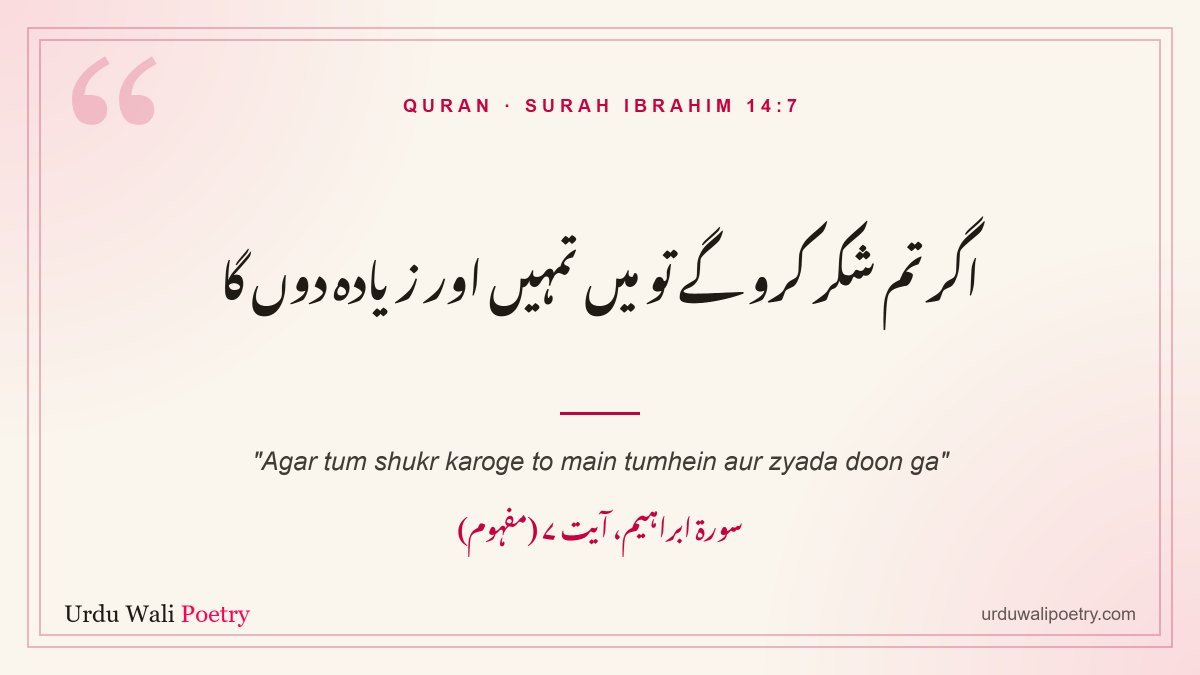
اگر تم شکر کرو گے تو میں تمہیں اور زیادہ دوں گا
Agar tum shukr karoge to main tumhein aur zyada doon ga
Surah Ibrahim 14:7 (Mafhoom)
Explanation: Allah Himself speaks in the first person here: “main tumhein aur zyada doon ga”. Shukr is not only saying Alhamdulillah; it is using a blessing in the right way. The same ayah warns that ingratitude brings a heavy punishment, so the verse works both as a promise and a warning.
Patience, Mercy, and the Reality of This World
Two things test a person every day: anger at people and love of the world. The Quran and Hadith treat both with very practical advice.
جو غصہ پی جاتے ہیں اور لوگوں کو معاف کر دیتے ہیں، اور اللہ نیکی کرنے والوں سے محبت کرتا ہے
Jo ghussa pee jate hain aur logon ko maaf kar dete hain, aur Allah neki karne walon se mohabbat karta hai
Surah Aal-e-Imran 3:134 (Mafhoom)
Explanation: Notice the order. First you swallow the anger, then you forgive, and only then Allah calls you a muhsin. Forgiving without first controlling anger is almost impossible, so the ayah teaches the steps in the right sequence.
طاقتور وہ نہیں جو کشتی میں دوسروں کو پچھاڑ دے، طاقتور وہ ہے جو غصے کے وقت خود پر قابو رکھے
Taqatwar woh nahi jo kushti mein doosron ko pachhaar de, taqatwar woh hai jo ghusse ke waqt khud par qaboo rakhe
Sahih al-Bukhari 6114
Explanation: The Arabic word for the wrestler is sura’a, someone who keeps throwing people down. The Prophet (peace be upon him) turned the idea of a strong man upside down: the real fight is inside you. A good line to remember in traffic, in family arguments and in the comment section.
اور دنیا کی یہ زندگی تو بس کھیل تماشا ہے، اور اصل زندگی آخرت کا گھر ہے
Aur duniya ki yeh zindagi to bas khel tamasha hai, aur asal zindagi aakhirat ka ghar hai
Surah Al-Ankabut 29:64 (Mafhoom)
Explanation: The Arabic word for the Hereafter’s life here is al-hayawan, a form that means life in its fullest sense. The ayah does not say the world is worthless; it says it is temporary play, and the lasting home is somewhere else. The old version of this page carried the same idea without its source.
اللہ کو سب سے پیارا عمل وہ ہے جو ہمیشہ کیا جائے، چاہے تھوڑا ہو
Allah ko sab se pyara amal woh hai jo hamesha kiya jaye, chahe thora ho
Sahih al-Bukhari 6464
Explanation: Big promises at the start of Ramadan often fade in a week. This Hadith tells us that two rakat of nafl every night are better than a huge effort that stops. Small and regular wins.
Islamic Quotes in Urdu on Good Character (Akhlaq)
In Islam good character is not an extra; it is how faith shows itself in front of people. These six quotes cover the tongue, the hand, the heart and modesty.
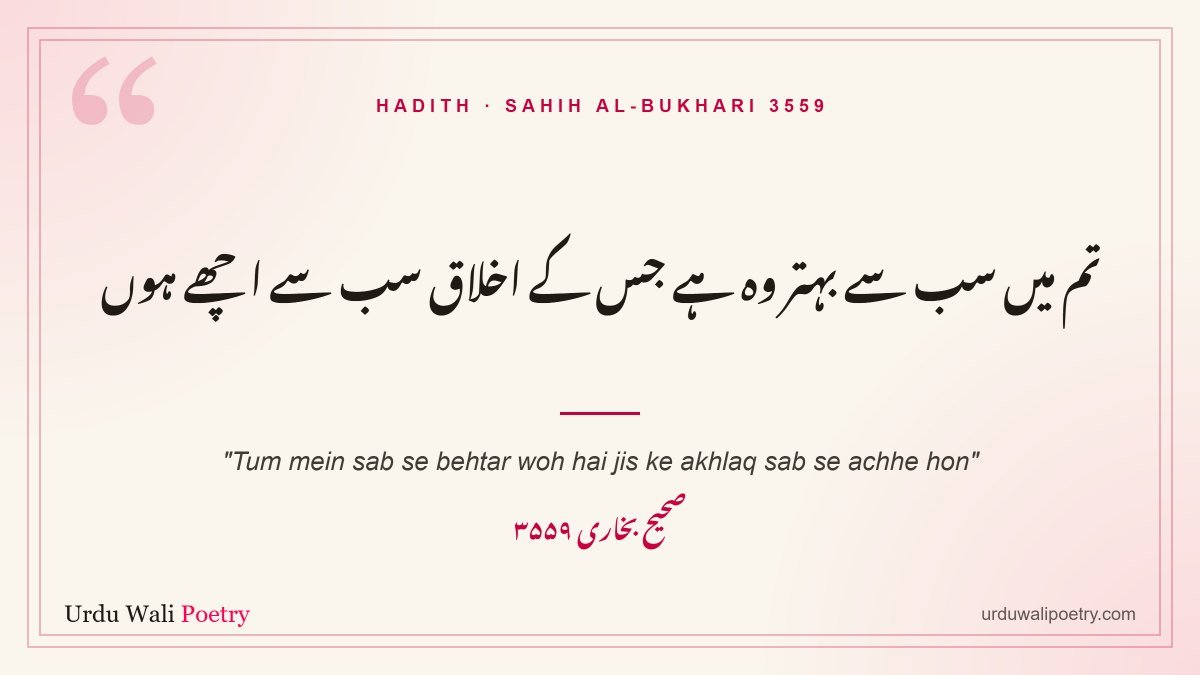
تم میں سب سے بہتر وہ ہے جس کے اخلاق سب سے اچھے ہوں
Tum mein sab se behtar woh hai jis ke akhlaq sab se achhe hon
Sahih al-Bukhari 3559
Explanation: The measure of the best person is not money, family name or even how much worship people can see. It is akhlaq, how you treat others. This is the Hadith to remember when someone is very religious in looks but harsh in behaviour.
مسلمان وہ ہے جس کی زبان اور ہاتھ سے دوسرے مسلمان محفوظ رہیں
Musalman woh hai jis ki zuban aur haath se doosre Musalman mehfooz rahen
Sahih al-Bukhari 10
Explanation: The tongue comes before the hand. Words hurt more often than hands do, and today the “hand” also includes what we type and forward. A Muslim is someone others feel safe around.
جو اللہ اور آخرت کے دن پر ایمان رکھتا ہے، وہ اچھی بات کہے یا خاموش رہے
Jo Allah aur aakhirat ke din par iman rakhta hai, woh achhi baat kahe ya khamosh rahe
Sahih al-Bukhari 6018
Explanation: Only two choices are given: a good word or silence. There is no third option for “just saying it”. This one line is a complete rule for arguments, gossip and social media.
تم میں سے کوئی مومن نہیں ہو سکتا جب تک اپنے بھائی کے لیے وہی پسند نہ کرے جو اپنے لیے پسند کرتا ہے
Tum mein se koi momin nahi ho sakta jab tak apne bhai ke liye wohi pasand na kare jo apne liye pasand karta hai
Sahih al-Bukhari 13
Explanation: The test is simple and uncomfortable: would you be happy if your friend got the same promotion, rishta or success you want? Hasad (envy) quietly fails this test, which is why the Hadith links it to iman itself.
اے ایمان والو! بہت زیادہ گمان کرنے سے بچو، بے شک بعض گمان گناہ ہیں، اور ایک دوسرے کی غیبت نہ کرو
Aye iman walo! Bohat zyada gumaan karne se bacho, beshak baaz gumaan gunah hain, aur ek doosre ki gheebat na karo
Surah Al-Hujurat 49:12 (Mafhoom)
Explanation: The ayah moves step by step: first suspicion, then spying, then backbiting. One bad guess about someone often ends in talking about them behind their back. Stopping at the first step saves you from the rest.
Explanation: The Prophet (peace be upon him) said this when he heard a man telling his brother to be less shy. Haya is not weakness or awkwardness; it is the inner feeling that stops a person from doing something shameful, even when nobody is watching.
Islamic Quotes About Parents, Namaz and Knowledge
These quotes are the ones people most often share for parents and for reminders about prayer. Each one is shorter and stronger when you read the full context.
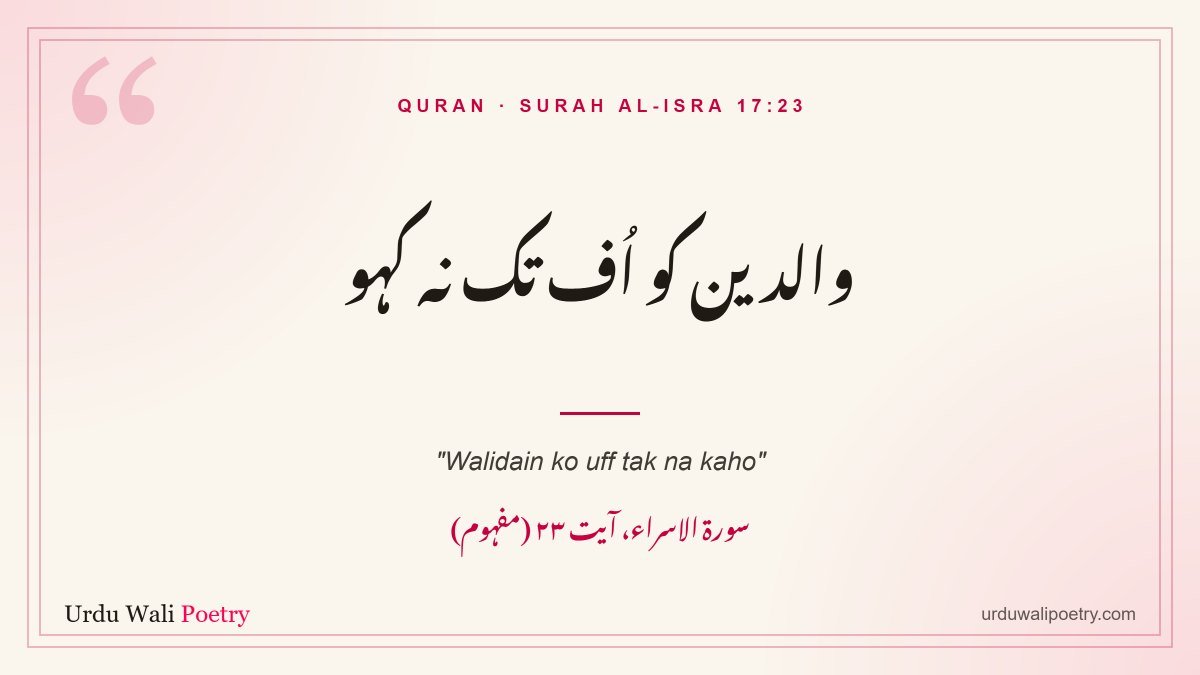
والدین کو “اُف” تک نہ کہو، نہ انہیں جھڑکو، اور ان سے عزت کے ساتھ بات کرو
Walidain ko “uff” tak na kaho, na unhein jhirko, aur un se izzat ke saath baat karo
Surah Al-Isra 17:23 (Mafhoom)
Explanation: “Uff” is the smallest sound of irritation a person can make, and even that is not allowed. The ayah speaks specifically of parents reaching old age, the time when they become slow, repeat things and need patience the most.
ایک شخص نے پوچھا: میرے اچھے سلوک کا سب سے زیادہ حق دار کون ہے؟ فرمایا: تمہاری ماں، پھر تمہاری ماں، پھر تمہاری ماں، پھر تمہارا باپ
Ek shakhs ne poochha: mere achhe sulook ka sab se zyada haqdar kaun hai? Farmaya: tumhari maa, phir tumhari maa, phir tumhari maa, phir tumhara baap
Sahih al-Bukhari 5971
Explanation: The mother is named three times before the father. Scholars explain this as the three hardships only a mother carries: pregnancy, birth and nursing. It is one of the most shared Hadith on Mother’s Day, and this is its correct reference.
بے شک نماز بے حیائی اور برے کاموں سے روکتی ہے
Beshak namaz be-hayai aur bure kaamon se rokti hai
Surah Al-Ankabut 29:45 (Mafhoom)
Explanation: This is the real Quran ayah about the power of namaz. If someone prays but nothing changes in their behaviour, scholars say the prayer itself needs more attention, more focus and more understanding. Namaz is meant to change the person who reads it.
اور کہو: اے میرے رب! میرے علم میں اضافہ فرما
Aur kaho: aye mere Rab! Mere ilm mein izafa farma
Surah Ta-Ha 20:114 (Mafhoom)
Explanation: Rabbi zidni ilma is a dua Allah Himself taught the Prophet (peace be upon him): not more wealth or power, but more knowledge. It is short enough for students to read before every exam and every class.
Short Islamic Quotes for WhatsApp Status
These four quotes are short enough for a status and still carry a clear message. Share them with the reference, so your contacts know they are authentic.
اپنے بھائی کو دیکھ کر مسکرانا بھی صدقہ ہے
Apne bhai ko dekh kar muskurana bhi sadqa hai
Jami at-Tirmidhi 1956 (Hasan)
Explanation: Sadqa is not only money. A smile costs nothing, and the Hadith counts it as charity, along with guiding a lost person and removing a stone from the road. A good status for anyone who thinks they have nothing to give.
Explanation: Imam Bukhari placed this Hadith first in his whole collection. The same action, like helping someone, can be worship or show off, depending only on the intention behind it.
اور نیکی کرو، بے شک اللہ نیکی کرنے والوں سے محبت کرتا ہے
Aur neki karo, beshak Allah neki karne walon se mohabbat karta hai
Surah Al-Baqarah 2:195 (Mafhoom)
Explanation: The word is ihsan: doing good in the best way, not just enough to pass. Allah does not only reward the muhsinin, He says He loves them.
اے ایمان والو! اللہ سے ڈرو اور سیدھی بات کہو
Aye iman walo! Allah se daro aur seedhi baat kaho
Surah Al-Ahzab 33:70 (Mafhoom)
Explanation: Qawlan sadeeda means a straight, honest word with no twist. The next ayah promises that Allah will set your deeds right because of it. Honesty in speech fixes more than we think.
Popular Islamic Quotes That Are Not Quran or Hadith
Many lines shared as “Islamic quotes” have no Quran or Hadith source. Some are sayings of companions or scholars, and some are just motivational lines. They can still be good advice, but they should not be shared as the words of Allah or the Prophet (peace be upon him).
1. “Sabr iman ka aadha hissa hai”. This is a saying of the companion Abdullah ibn Masud (may Allah be pleased with him), not a Hadith of the Prophet (peace be upon him). The authentic Hadith on patience is the one above from Sahih Muslim 223: “sabr roshni hai”.
2. “Namaz woh taqat hai jo namumkin ko mumkin bana deti hai”. This is a motivational line with no Quran or Hadith source. For the real ayah about the power of namaz, use Surah Al-Ankabut 29:45 above.
3. “Ilm hasil karna har Muslim par farz hai” is often quoted from Sunan Ibn Majah 224. Scholars graded the full chain of that narration as very weak, although the first part is reported through other routes. If you want a reference no one can question, use the dua from Surah Ta-Ha 20:114.
A simple rule before sharing: if a quote has no surah and ayah number or no Hadith book and number, write “a saying” instead of “Hadith”.
For quotes focused on Allah’s mercy and names, read our Allah quotes in Urdu, and for trust in Allah read the tawakkul quotes in Urdu. For the sayings of the fourth caliph, see Hazrat Ali quotes with reference.
Have a Line of Faith of Your Own?
If these quotes moved you to write a hamd, a naat or a few lines about faith, share them with our readers in Urdu or Roman Urdu under your own name. Every post is checked before it goes live, and religious poetry is read with extra care. Post your own shayari here.
Conclusion
The best Islamic quotes are the ones you can trace back to their source and then actually live by: holding on with sabr, staying grateful, controlling anger, speaking a good word and honouring parents. Keep the reference with every quote you share, so the message stays as pure as it was given.
If you love faith in poetic form, explore our religious poetry in Urdu and the Sufi poetry of Khwaja Mir Dard, Sultan Bahu and Amir Khusrau.
FAQs
What are Islamic quotations?
Islamic quotations are short lines taken from the Quran or authentic Hadith that teach faith, patience and good character. A genuine Islamic quote always has a source: a surah and ayah number, or a Hadith collection and number.
Is “sabr iman ka aadha hissa hai” a Hadith?
No. It is a saying of the companion Abdullah ibn Masud (may Allah be pleased with him). The authentic Hadith in Sahih Muslim 223 says “sabr roshni hai” (patience is light).
What is the best Islamic quote about parents?
Surah Al-Isra 17:23 tells believers not to say even “uff” to their parents. Sahih al-Bukhari 5971 names the mother three times before the father as most deserving of good treatment.
Which Hadith says the best person has the best character?
Sahih al-Bukhari 3559 says the best among you are those with the best akhlaq (character).
What is the Quran verse about shukr?
Surah Ibrahim 14:7 says that if you are grateful, Allah will give you more.
Can I share these Islamic quotes on WhatsApp status?
Yes. Share the Urdu or Roman Urdu line together with its reference, like “Sahih al-Bukhari 6018” or “Surah Ibrahim 14:7”, so people can check it and the message stays authentic.
Comments0
No comments yet. Be the first to share your thoughts.