

Looking for famous Allama Iqbal poetry for Iqbal Day? Here are 15 verified Iqbal sher in Urdu and Roman Urdu, each with its book name and a simple meaning. You will also learn about his life, his books and why Pakistan celebrates 9 November.
Allama Muhammad Iqbal is called Shair-e-Mashriq (Poet of the East). His poetry still gives courage to students, young people and anyone who feels low. Every sher on this page is his own verified kalam (poetry), taken from his books.
Table of Contents
- About Allama Iqbal: Life, Books and Why 9 November Matters
- Famous Allama Iqbal Poetry—Inspirational Urdu Verses with Deep Meaning
- Allama Iqbal Poetry on Khudi
- Iqbal’s Shaheen Poetry for the Youth
- Iqbal Poetry on Hope, Faith and Hard Work
- From Shikwa and Jawab-e-Shikwa
- Lab Pe Aati Hai Dua: The Child’s Prayer Every Pakistani Knows
- A Famous Sher That Is Not Iqbal’s
- How to Celebrate Iqbal Day at Home and School
- Share Your Own Poetry
- Conclusion
- FAQ
About Allama Iqbal: Life, Books and Why 9 November Matters
Allama Muhammad Iqbal was born on 9 November 1877 in Sialkot. He died on 21 April 1938 in Lahore, and his tomb (Mazar-e-Iqbal) is beside the Badshahi Mosque.
He studied in Sialkot and Lahore, then went to Cambridge (England) and earned a PhD in Germany. In his early years he sent his ghazals to the great poet Daagh Dehlvi for islah (correction).
In his 1930 Allahabad address, he presented the idea of a separate homeland for Muslims in north-west India. This is why he is also called Mufakkir-e-Pakistan (the thinker of Pakistan) and Hakeem-ul-Ummat.
His Urdu poetry books:
• Bang-e-Dra (1924), his first Urdu collection
• Bal-e-Jibril (1935), full of ghazals on khudi and the shaheen
• Zarb-e-Kaleem (1936)
• Armaghan-e-Hijaz (1938), published after his death, partly in Urdu
He also wrote major Persian books, such as Asrar-e-Khudi and Javid Nama.
Iqbal Day (Youm-e-Iqbal) is celebrated every year on 9 November, his birthday. In 2026 it falls on a Monday and is a public holiday in Pakistan.
Famous Allama Iqbal Poetry—Inspirational Urdu Verses with Deep Meaning
The poetry below is grouped by theme: khudi, the shaheen, hope, Shikwa and the famous child’s prayer. Each sher shows its book, so you can share it with confidence.
Allama Iqbal Poetry on Khudi (Self-Respect)
Khudi is Iqbal’s most famous idea. It means self-respect, self-awareness and believing in the strength Allah has put inside you.
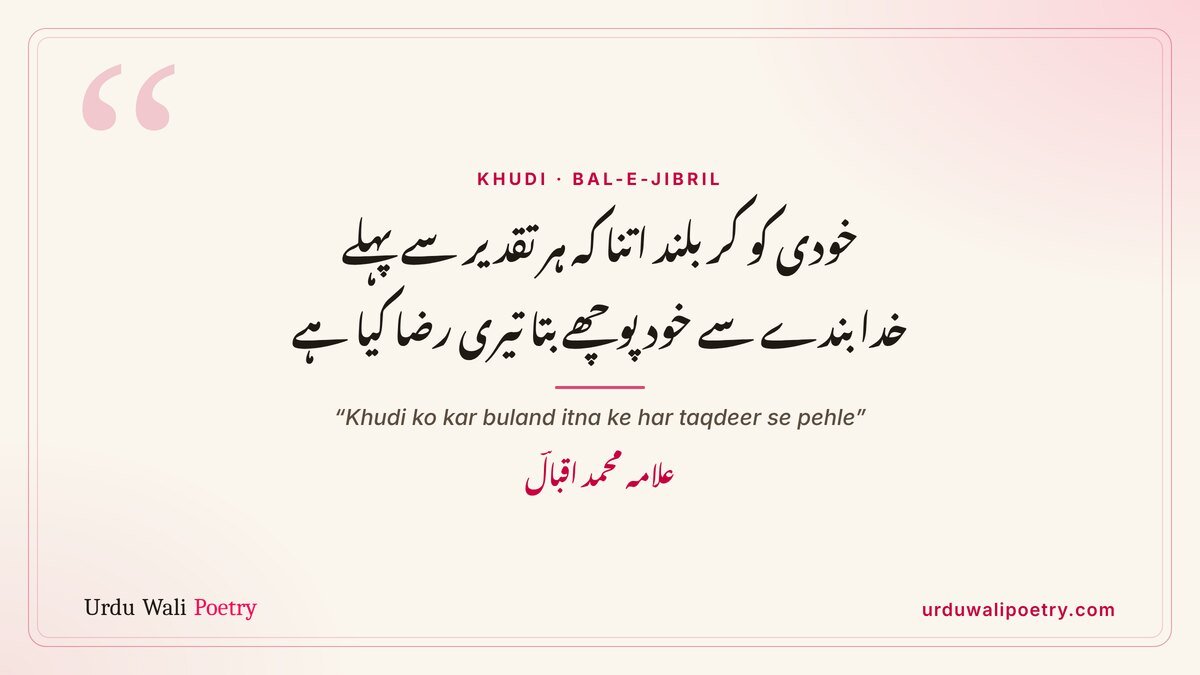
خودی کو کر بلند اتنا کہ ہر تقدیر سے پہلے
خدا بندے سے خود پوچھے بتا تیری رضا کیا ہے
Khudi ko kar buland itna ke har taqdeer se pehle
Khuda bande se khud poochhe bata teri raza kya hai
— Allama Iqbal (Bal-e-Jibril)
Explanation: Raise your character and effort so high that even your destiny reflects your hard work. This is the most quoted Iqbal sher in Pakistan.
اپنے من میں ڈوب کر پا جا سراغِ زندگی
تو اگر میرا نہیں بنتا نہ بن اپنا تو بن
Apne man mein doob kar pa ja suragh-e-zindagi
Tu agar mera nahin banta na ban apna to ban
— Allama Iqbal (Bal-e-Jibril)
Explanation: Look inside yourself to find the meaning of life. Even if you don’t follow anyone else, at least be true to your own self.
نگہ بلند سخن دل نواز جاں پرسوز
یہی ہے رختِ سفر میرِ کارواں کے لیے
Nigah buland sukhan dil-nawaz jaan pur-soz
Yahi hai rakht-e-safar mir-e-karwan ke liye
— Allama Iqbal (Bal-e-Jibril)
Explanation: A true leader needs three things: a high vision, kind words and a passionate heart. Rakht-e-safar means the luggage for a journey.
Iqbal’s Shaheen Poetry for the Youth
For Iqbal, the shaheen (falcon) is a symbol of the brave young Muslim. It flies high, lives free and never eats what others have hunted.
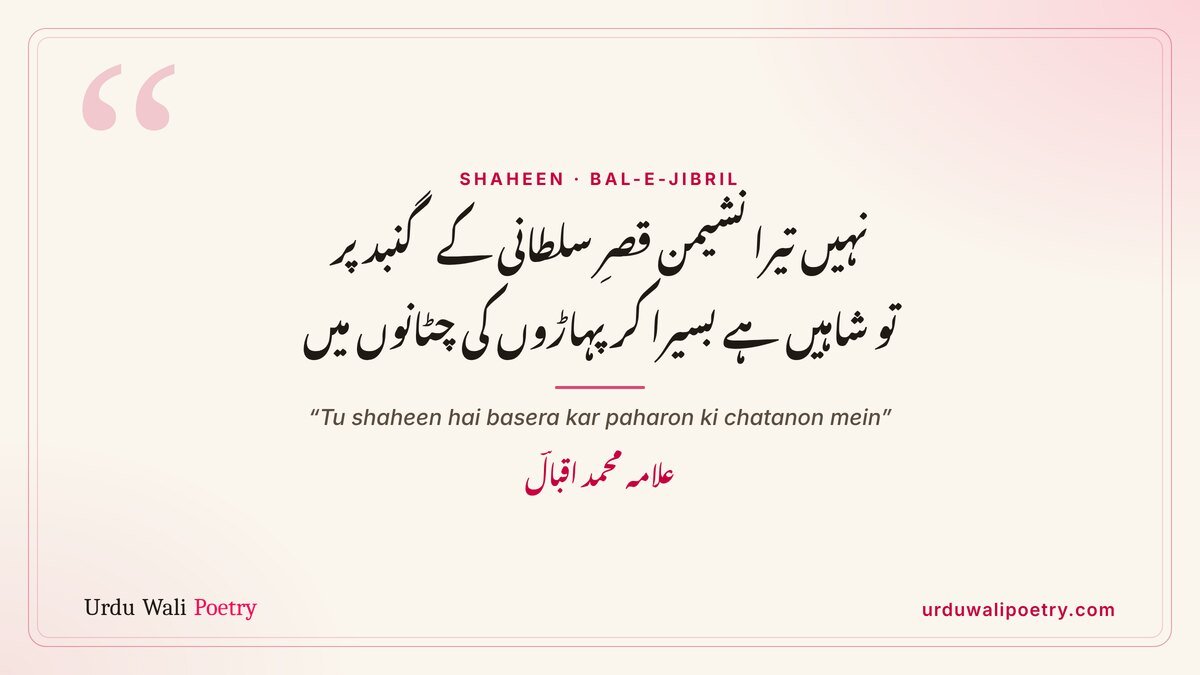
نہیں تیرا نشیمن قصرِ سلطانی کے گنبد پر
تو شاہیں ہے بسیرا کر پہاڑوں کی چٹانوں میں
Nahin tera nasheman qasr-e-sultani ke gumbad par
Tu shaheen hai basera kar paharon ki chatanon mein
— Allama Iqbal (Bal-e-Jibril, Aik Naujawan Ke Naam)
Explanation: Your home is not on the domes of royal palaces. You are a falcon, so live among the high rocks of the mountains, which means a life of struggle and freedom, not luxury.
عقابی روح جب بیدار ہوتی ہے جوانوں میں
نظر آتی ہے ان کو اپنی منزل آسمانوں میں
Uqabi rooh jab bedaar hoti hai jawanon mein
Nazar aati hai un ko apni manzil aasmanon mein
— Allama Iqbal (Bal-e-Jibril)
Explanation: When the spirit of an eagle wakes up in young people, they start seeing their goals in the skies. Big dreams begin with an awake spirit.
ستاروں سے آگے جہاں اور بھی ہیں
ابھی عشق کے امتحاں اور بھی ہیں
Sitaron se aage jahan aur bhi hain
Abhi ishq ke imtihan aur bhi hain
— Allama Iqbal (Bal-e-Jibril)
Explanation: There are more worlds beyond the stars. Never think you have reached the end; more tests of passion are still ahead.
تو شاہیں ہے پرواز ہے کام تیرا
ترے سامنے آسماں اور بھی ہیں
Tu shaheen hai parwaz hai kaam tera
Tere samne aasman aur bhi hain
— Allama Iqbal (Bal-e-Jibril)
Explanation: You are a falcon and flying is your work. Don’t stop at one success, because more skies are waiting for you.
جوانوں کو مری آہِ سحر دے
پھر ان شاہیں بچوں کو بال و پر دے
خدایا آرزو میری یہی ہے
مرا نورِ بصیرت عام کر دے
Jawanon ko meri aah-e-sahar de
Phir in shaheen bachon ko baal-o-par de
Khudaya aarzoo meri yahi hai
Mera noor-e-baseerat aam kar de
— Allama Iqbal (Bal-e-Jibril, Rubai)
Explanation: Iqbal prays that young people get his early-morning devotion and the wings to fly. His only wish is that his light of insight spreads to everyone.
Iqbal Poetry on Hope, Faith and Hard Work
These sher are perfect for students before exams and for anyone starting something new.
نہیں ہے ناامید اقبالؔ اپنی کشتِ ویراں سے
ذرا نم ہو تو یہ مٹی بہت زرخیز ہے ساقی
Nahin hai na-umeed Iqbal apni kisht-e-veeran se
Zara nam ho to ye mitti bahut zarkhez hai saqi
— Allama Iqbal (Bal-e-Jibril)
Explanation: Iqbal has not lost hope in his barren field (his nation). With just a little moisture, meaning care and effort, this soil can become very fertile.
یقیں محکم عمل پیہم محبت فاتحِ عالم
جہادِ زندگانی میں ہیں یہ مردوں کی شمشیریں
Yaqeen mohkam amal paiham mohabbat fateh-e-aalam
Jihad-e-zindagani mein hain ye mardon ki shamsheeren
— Allama Iqbal (Bang-e-Dra, Tulu-e-Islam)
Explanation: Firm faith, constant effort and love that wins the world are the real swords in the struggle of life.
غلامی میں نہ کام آتی ہیں شمشیریں نہ تدبیریں
جو ہو ذوقِ یقیں پیدا تو کٹ جاتی ہیں زنجیریں
Ghulami mein na kaam aati hain shamsheeren na tadbeeren
Jo ho zauq-e-yaqeen paida to kat jaati hain zanjeeren
— Allama Iqbal (Bang-e-Dra, Tulu-e-Islam)
Explanation: In slavery, neither swords nor clever plans help. When true faith is born in the heart, the chains break by themselves.
ہزاروں سال نرگس اپنی بے نوری پہ روتی ہے
بڑی مشکل سے ہوتا ہے چمن میں دیدہ ور پیدا
Hazaron saal nargis apni be-noori pe roti hai
Bari mushkil se hota hai chaman mein deeda-war paida
— Allama Iqbal (Bang-e-Dra, Tulu-e-Islam)
Explanation: The narcissus flower cries for thousands of years over its blindness. A person with true vision (deeda-war) is born very rarely.
From Shikwa and Jawab-e-Shikwa
Shikwa (the complaint) and Jawab-e-Shikwa (the answer) are two of Iqbal’s most famous long poems in Bang-e-Dra. In Shikwa, a Muslim complains to Allah, and in Jawab-e-Shikwa the answer comes.
دل سے جو بات نکلتی ہے اثر رکھتی ہے
پر نہیں طاقتِ پرواز مگر رکھتی ہے
Dil se jo baat nikalti hai asar rakhti hai
Par nahin taqat-e-parwaz magar rakhti hai
— Allama Iqbal (Bang-e-Dra, Jawab-e-Shikwa)
Explanation: Words that come from the heart always have an effect. They have no wings, yet they can fly all the way to the sky.
کی محمدؐ سے وفا تو نے تو ہم تیرے ہیں
یہ جہاں چیز ہے کیا لوح و قلم تیرے ہیں
Ki Muhammad se wafa tu ne to hum tere hain
Ye jahan cheez hai kya lauh-o-qalam tere hain
— Allama Iqbal (Bang-e-Dra, Jawab-e-Shikwa)
Explanation: This is the famous last sher of Jawab-e-Shikwa. If you stay loyal to the Prophet Muhammad ﷺ, Allah will be yours, and not just this world but the Lauh (Tablet) and Qalam (Pen) of destiny too.
Lab Pe Aati Hai Dua: The Child’s Prayer Every Pakistani Knows
Almost every Pakistani has recited this nazm in the school morning assembly. Its title is Bachche ki Dua (A Child’s Prayer), and Iqbal wrote it in 1902.
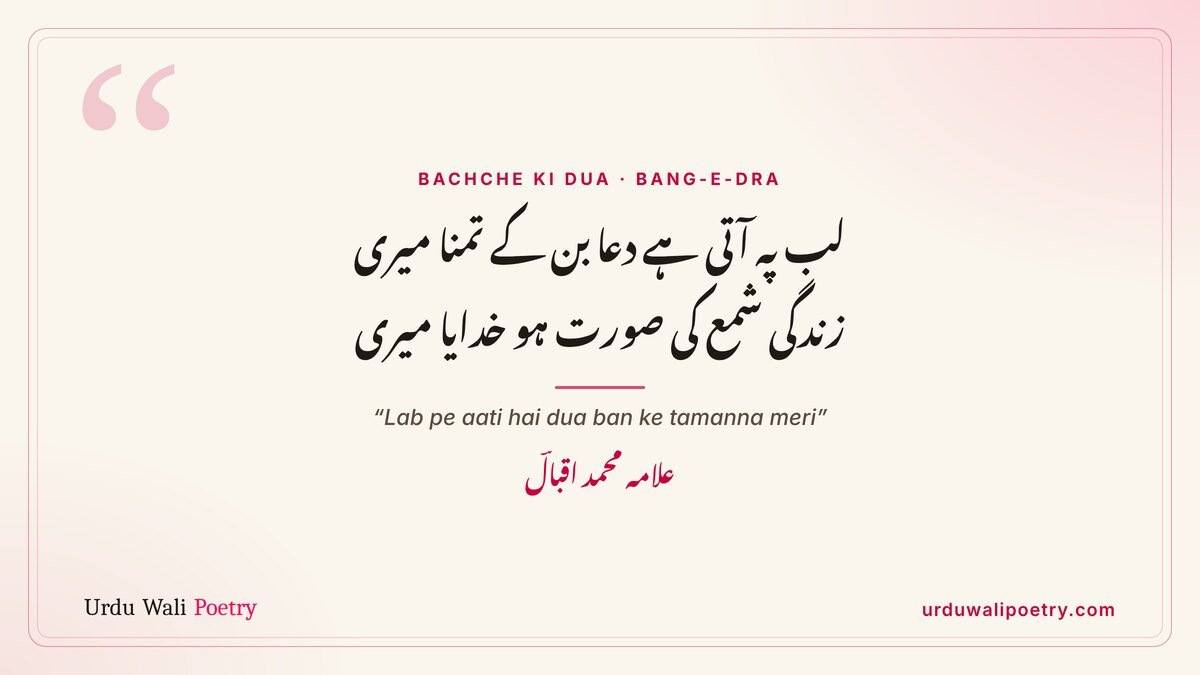
لب پہ آتی ہے دعا بن کے تمنا میری
زندگی شمع کی صورت ہو خدایا میری
Lab pe aati hai dua ban ke tamanna meri
Zindagi shama ki surat ho Khudaya meri
— Allama Iqbal (Bang-e-Dra, Bachche ki Dua)
Explanation: My wish comes to my lips as a prayer: O Allah, make my life like a candle that gives light to others.
مرے اللہ برائی سے بچانا مجھ کو
نیک جو راہ ہو اس رہ پہ چلانا مجھ کو
Mere Allah burai se bachana mujh ko
Nek jo raah ho us reh pe chalana mujh ko
— Allama Iqbal (Bang-e-Dra, Bachche ki Dua)
Explanation: This is the last sher of the nazm. The child asks Allah to save him from evil and keep him on the right path.
A Famous Sher That Is Not Iqbal’s
The sher that begins “Tundi-e-baad-e-mukhalif se na ghabra ae uqaab” is shared on Iqbal Day every year with Iqbal’s name. It was actually written by Syed Sadiq Husain, a lawyer and Muslim League leader from Shakargarh (Sialkot district), and first published in 1918.
Dawn newspaper explained that it comes from a longer poem published in 1918 and later included in his book Barg-e-Sabz. Many other lines that end with the word “Iqbal” on social media are also not found in his books, so always check the book name before sharing.
How to Celebrate Iqbal Day at Home and School
• Recite Lab Pe Aati Hai Dua with your children and explain its meaning.
• Share one Iqbal sher as your WhatsApp status, with the correct book name.
• Read a few pages of Bang-e-Dra or Bal-e-Jibril.
• Visit Mazar-e-Iqbal in Lahore if you live nearby.
• Write a few lines of your own inspired by Iqbal and share them with readers.
Share Your Own Poetry
Do you write Urdu poetry inspired by Iqbal’s khudi and shaheen? Share your own sher on Urdu Wali Poetry. Every post is reviewed and published with your name.
Share your poetry here: post shayari
Conclusion
Allama Iqbal’s poetry is not only for 9 November. His sher on khudi, the shaheen and hope can guide you every day. Read more of his kalam on the Allama Iqbal poet page, enjoy our religious poetry collection, and read old diwans for free in our books library.
Iqbal Day Mubarak, and always share the correct sher with the correct name.
FAQ
When is Iqbal Day celebrated?
Iqbal Day (Youm-e-Iqbal) is celebrated every year on 9 November, the birthday of Allama Muhammad Iqbal, who was born in Sialkot in 1877.
Is 9 November 2026 a public holiday in Pakistan?
Yes. 9 November 2026 is a Monday and is a public holiday for Iqbal Day in Pakistan.
What is Allama Iqbal’s most famous sher?
“Khudi ko kar buland itna ke har taqdeer se pehle, Khuda bande se khud poochhe bata teri raza kya hai” from Bal-e-Jibril is his most quoted sher.
Which book has Lab Pe Aati Hai Dua?
The nazm Bachche ki Dua (Lab Pe Aati Hai Dua) is in Bang-e-Dra, Iqbal’s first Urdu poetry book (1924).
Is “Tundi-e-baad-e-mukhalif se na ghabra ae uqaab” written by Iqbal?
No. This sher is by Syed Sadiq Husain of Shakargarh. It is often wrongly shared with Iqbal’s name.
What does khudi mean in Iqbal’s poetry?
Khudi means self-respect and self-awareness: knowing your own worth and using the strength Allah has given you, without depending on others.
Comments0
No comments yet. Be the first to share your thoughts.