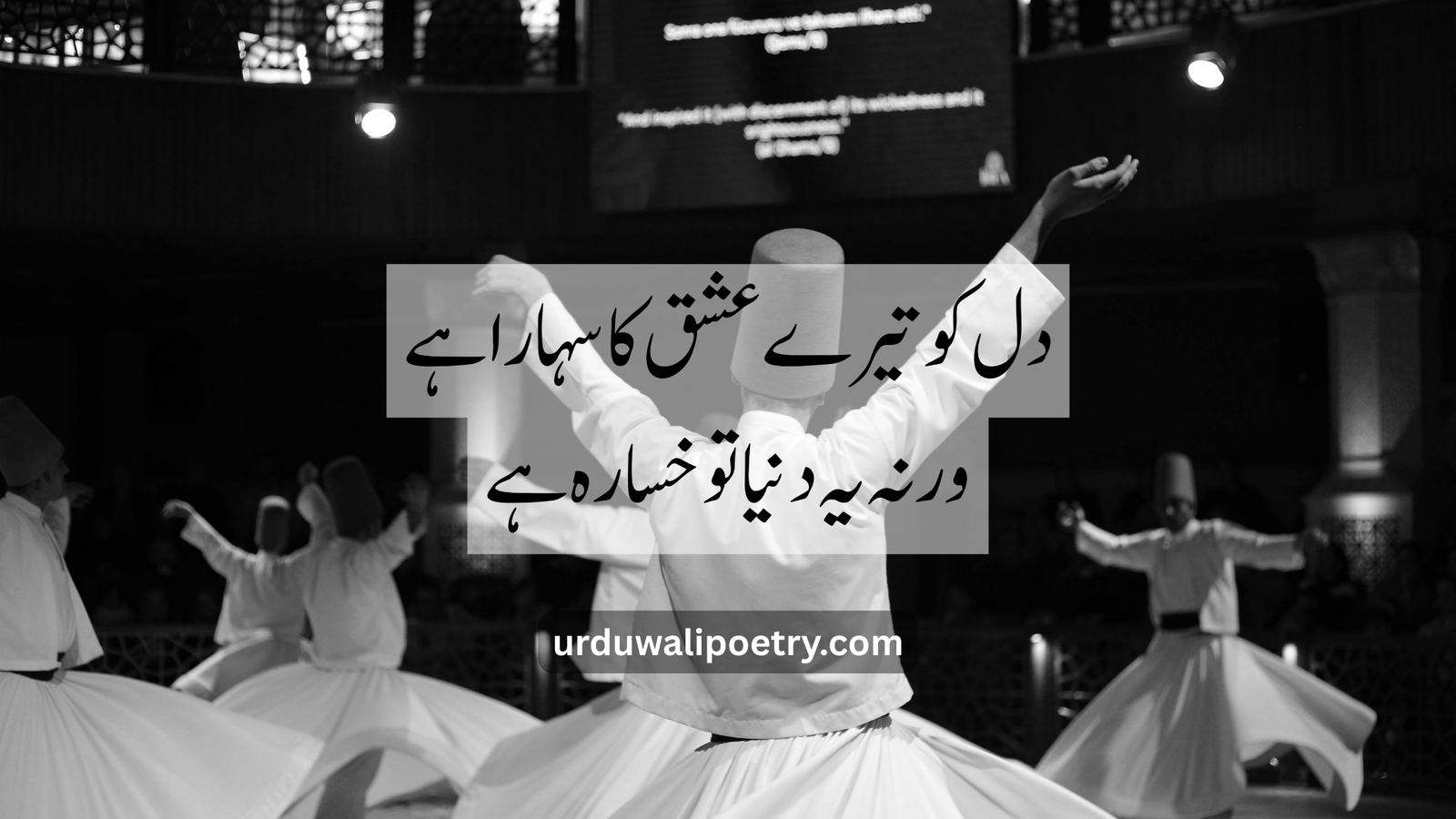
Sufi Poetry in Urdu is a spiritual treasure that touches the heart and awakens the soul. Rooted in Islamic mysticism (Tasawwuf), Sufi poetry speaks about divine love, self-purification, inner peace, and the journey toward Allah. Unlike ordinary poetry, it does not only express emotions—it transforms the reader from within.
From the timeless verses of Bulleh Shah to the spiritual wisdom of Jalal ad-Din Muhammad Rumi and the deep philosophy of Allama Iqbal, Famous Sufi Poets Poetry continues to inspire millions around the world.
Famous Sufi Poets Poetry: Dil-e-Nadaan and the Cry for Divine Love
These verses express the restless heart searching for the cure to its unseen pain. In Sufi thought, this “pain” is actually the longing for divine love. By losing the ego, one finds God, realizing that everything in this world is temporary except the Divine. True peace comes not from searching outside but from looking within the heart—where the presence of Allah is discovered.
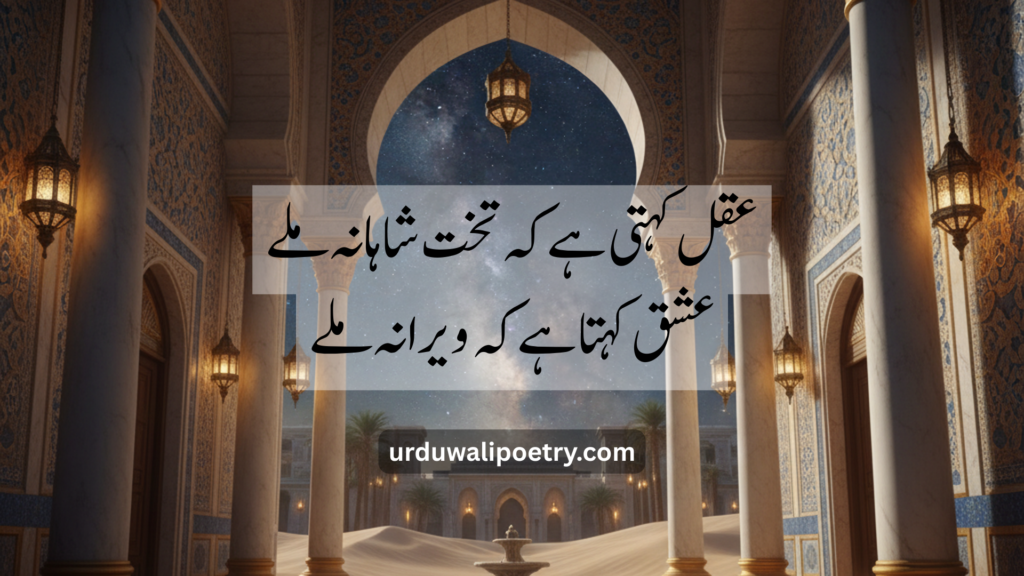
دلِ ناداں تجھے ہوا کیا ہے
آخر اس درد کی دوا کیا ہے
Dil-e-nadaan, tujhe hua kya hai
Aakhir is dard ki dawa kya hai
عشق میں ہم تمہیں کیا بتائیں
خود کو کھو کر خدا کو پایا ہے
Ishq mein hum tumhein kya batayein
Khud ko kho kar Khuda ko paaya hai
میں بھی ہو جاؤں گا فنا اک دن
بس تیرا نام رہ جائے گا
Main bhi ho jaaunga fana ek din
Bas tera naam reh jaayega
عشق دی نگری وچ کوئی کوئی وسدا
جتھے نفس دا کوئی زور نہ رہندا
Ishq di nagri vich koi koi vasda
Jithe nafs da koi zor na rehnda
جو ڈھونڈا باہر تو نہ ملا
جب دل میں دیکھا تو خدا ملا
Jo dhoonda bahar to na mila
Jab dil mein dekha to Khuda mila
میں جاناں جوگیا عشق دا روگیا
ایہہ درد نہ لبھے حکیماں توں
Main jaana jogiya ishq da rogiya
Eh dard na labhe hakeeman toon
تیرا عشق سچا اے مولا
باقی سب فانی افسانے
Tera ishq sacha ae Maula
Baqi sab fani afsane
The Essence of Famous Sufi Poets Poetry
Famous Sufi poets’ poetry teaches us that real success is not wealth or fame—it is closeness to Allah. Sufi poets describe the struggle against the ego (nafs) and emphasize humility, patience, and love.
As Rumi beautifully said:
“What you seek is seeking you.”
And in Bulleh Shah’s poetry, we find powerful messages of unity and self-realization. His famous lines challenge religious hypocrisy and invite people toward pure love and spiritual awakening.
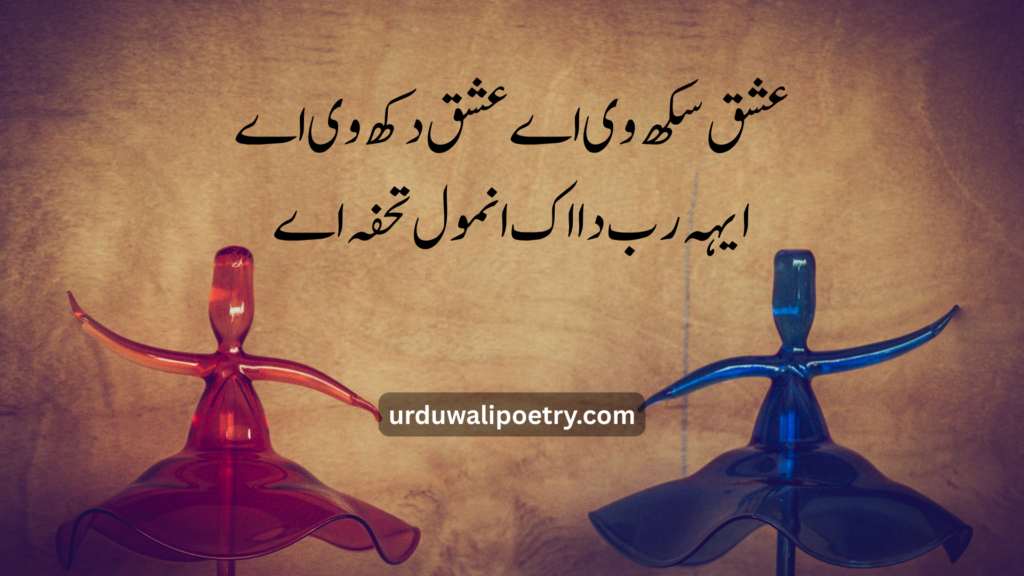
بُلھا کیہ جاناں میں کون
نہ میں مومن وچ مسیتاں
Bulha kih jaanan main kaun
Na main momin vich masitaan
عشق نہ پوچھے ذات نہ پات
عشق رب نال سیدھا رابطہ
Ishq na poochay zaat na paat
Ishq Rab naal seedha rabta
جس دل اندر عشق نہ وسے
اوہ دل ویران کھنڈر اے
Jis dil andar ishq na vasay
Oh dil veeraan khandar ae
عشق دی بازی اوہ جیتے
جو خود نوں ہار وی جاوے
Ishq di baazi oh jeetay
Jo khud nu haar vi jaaway
رب دل وچ وسدا اے
مسجد مندراں وچ نہیں
Rab dil vich vasda ae
Masjid mandraan vich nahi
نفس دی قید توں نکل جا
ایہہ آزادی دا پہلا قدم اے
Nafs di qaid toon nikal ja
Eh aazadi da pehla qadam ae
دل دی صفائی کر لے بندے
ایہہ سب توں وڈی عبادت اے
Dil di safai kar le banday
Eh sab toon waddi ibadat ae
Conclusion
In conclusion, Sufi Poetry in Urdu is not just literature—it is a path toward spiritual enlightenment. Through famous Sufi poetry, especially Bulleh Shah poetry, we learn that divine love is the ultimate truth. These timeless verses continue to guide hearts toward peace, tolerance, and self-realization.
FAQs
1. What is Sufi Poetry in Urdu?
Sufi Poetry in Urdu is spiritual poetry based on Islamic mysticism (Tasawwuf) that focuses on divine love, self-purification, and closeness to Allah.
2. What is the main theme of Sufi Poetry in Urdu?
The main themes include divine love (Ishq-e-Haqiqi), unity of humanity, rejection of ego (nafs), patience, humility, and spiritual enlightenment.
3. Who are considered famous Sufi poets?
Some of the most renowned Sufi poets include Bulleh Shah, Jalal ad-Din Muhammad Rumi, Shah Abdul Latif Bhittai, and Allama Iqbal.
4. Why is Bulleh Shah Poetry so famous?
Bulleh Shah Poetry is famous because it promotes love, tolerance, and spiritual awakening beyond religious and social divisions.
5. What is the difference between Ishq-e-Majazi and Ishq-e-Haqiqi?
Ishq-e-Majazi refers to worldly love, while Ishq-e-Haqiqi means divine love for Allah, which is the ultimate goal in Sufi teachings.
6. How does Sufi Poetry influence daily life?
Sufi poetry teaches patience, forgiveness, self-reflection, and inner peace, helping individuals live a balanced and meaningful life.
7. Is Sufi Poetry only about religion?
No, although rooted in Islamic spirituality, Sufi poetry also speaks about humanity, love, unity, and moral values that apply to everyone.
8. In which languages is Sufi poetry written?
Sufi poetry has been written in Urdu, Persian, Punjabi, Sindhi, Arabic, and many other languages.
9. What message does Famous Sufi Poets Poetry give to society?
It promotes harmony, equality, and spiritual awareness while discouraging pride, hatred, and materialism.
10. Why is Sufi Poetry in Urdu still popular today?
Sufi Poetry in Urdu remains popular because its message of love, peace, and self-discovery is timeless and relevant in every era.